
Home / Blog / AI-Powered Decision Making: How Businesses Can Turn Data into Action
AI & Technology · 23 November 2026
AI-Powered Decision Making: How Businesses Can Turn Data into Action
Discover how AI-powered decision making helps businesses transform data into actionable insights, predict trends, improve operational efficiency and make smarter business decisions.
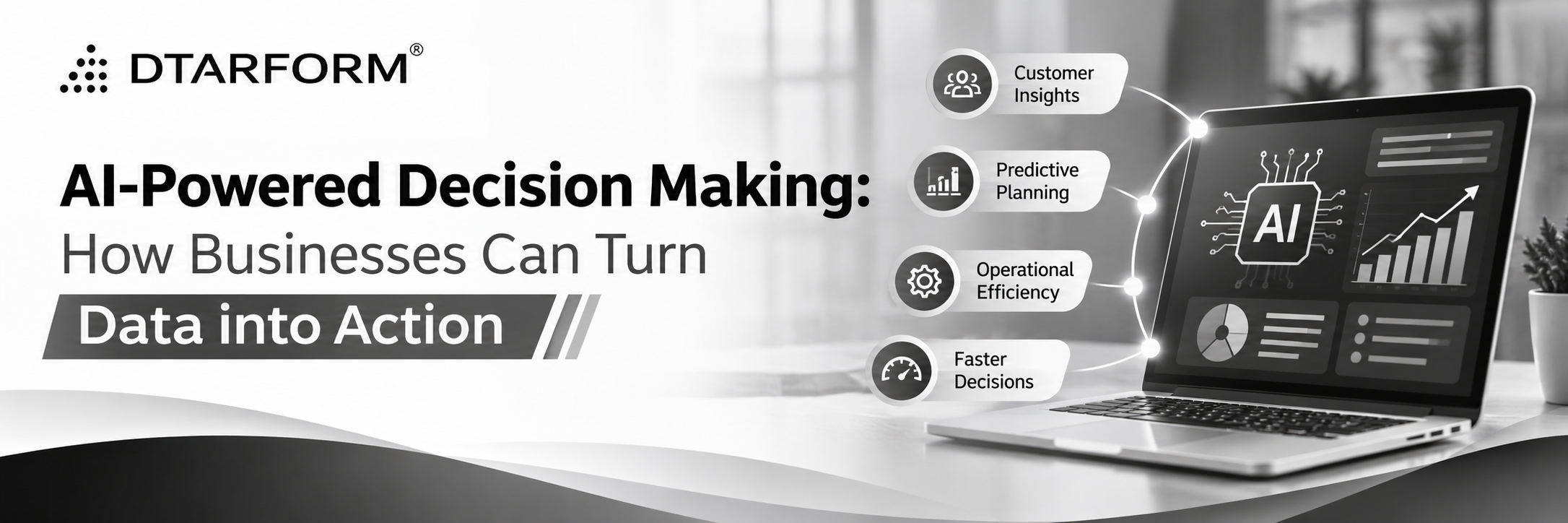
In today's competitive business environment, making the right decision at the right time can make a significant difference. Businesses generate enormous amounts of data through customer interactions, sales, operations, marketing campaigns and financial activities. However, collecting data is only the beginning. The real challenge is understanding what that data means and using it to make smarter business decisions.
This is where AI-powered decision making comes in. By combining artificial intelligence, machine learning and data analytics, businesses can identify patterns, predict future trends and make informed decisions with greater speed and confidence.
What Is AI-Powered Decision Making?
AI-powered decision making is the process of using artificial intelligence to analyse business data, identify meaningful insights and recommend actions that support business goals.
Traditional decision making often depends on manual reports, spreadsheets and individual experience. While these methods remain valuable, they can take time and may overlook patterns hidden within large datasets.
AI helps businesses process information from multiple sources, recognise trends and generate actionable recommendations. Instead of simply understanding what happened in the past, organisations can use AI to anticipate what might happen next.
How AI Helps Businesses Turn Data into Action
AI creates value when insights become practical business improvements. Here are some ways organisations can use it:
1. Better Customer Understanding
AI analyses customer behaviour, purchase history and preferences to help businesses understand what their customers need. Companies can use these insights to personalise recommendations, improve customer experiences and identify potential opportunities.
2. Predictive Business Planning
Machine learning models can analyse historical information and identify patterns that help predict future demand, sales trends and operational requirements. This allows businesses to plan resources more effectively and respond to potential challenges earlier.
3. Improved Operational Efficiency
AI can identify inefficiencies in everyday business processes, such as inventory management, production planning and workflow operations. Businesses can use these insights to reduce delays, minimise unnecessary costs and improve productivity.
4. Faster and More Informed Decisions
AI-powered dashboards and intelligent systems can bring information from different departments into one place. Decision-makers can understand important performance indicators, compare possible outcomes and respond to changing business conditions more quickly.
Real-World Applications of AI-Powered Decision Making
The impact of AI can be seen across different industries.
-
Manufacturing: Predictive analytics helps identify equipment maintenance requirements and potential production issues.
-
Financial Services: AI supports fraud detection, risk assessment and financial forecasting.
-
Healthcare: Intelligent systems help analyse patient information and support clinical decision-making.
-
Retail and E-commerce: Businesses can forecast demand, understand customer preferences and optimize inventory.
-
Logistics: AI helps improve delivery planning, route optimisation and supply chain visibility.
These applications demonstrate how businesses can move beyond collecting information and start using it to solve practical challenges.
Challenges Businesses Should Consider
Although AI offers significant opportunities, successful implementation requires more than choosing an AI tool. Businesses need accurate, reliable and well-organised data. Poor-quality information can lead to misleading predictions and incorrect recommendations.
Data privacy, cybersecurity, transparency and human oversight are equally important. Organisations should establish clear governance processes and ensure that important decisions can be reviewed by responsible people.
According to the NIST AI Risk Management Framework, managing AI risks and building trustworthy AI systems should be part of the entire AI lifecycle.
How DTARFORM Helps Businesses Make Smarter Decisions with AI
Turning business data into meaningful action requires the right strategy, technology and implementation approach.
At DTARFORM, we help organisations move from AI ideas to practical technology solutions through AI discovery, blueprint development and custom AI development. Our approach begins with understanding business challenges, evaluating available data and identifying opportunities where AI can deliver measurable value.
From intelligent applications and AI-powered automation to integrations and infrastructure, our focus is on building solutions that fit real business requirements.
Explore our AI Technology services and business technology solutions to understand how AI can support your organisation's next stage of growth.
Frequently Asked Questions (AEO & GEO)
1. How does AI-powered decision making help businesses?
AI-powered decision making helps businesses analyse large datasets, identify patterns, predict trends and make faster, more informed decisions that improve operational efficiency and business performance.
2. What types of business data can AI analyse?
AI can analyse customer information, sales records, financial data, operational reports, inventory details, website analytics and other structured or unstructured business information.
3. Can small and medium-sized businesses use AI for decision making?
Yes. Small and medium-sized businesses can use AI-powered analytics, forecasting tools and automation solutions to improve planning, understand customers and make better use of available resources.
4. Is AI-powered decision making better than traditional decision making?
AI can improve traditional decision making by providing faster analysis, identifying hidden patterns and supporting predictions. However, human expertise remains important for context, accountability and final decisions.
5. How can businesses start implementing AI-powered decision making?
Businesses should begin by identifying a specific business problem, assessing their existing data, defining measurable objectives and selecting suitable AI solutions. Starting with a focused proof of concept can help validate the approach before scaling.
Conclusion
AI-powered decision making is not simply about adopting new technology. It is about using information more effectively to make better business choices. Organisations that combine reliable data, intelligent AI solutions and human expertise can respond to challenges faster and identify opportunities with greater confidence.
The future belongs to businesses that do more than collect data. It belongs to those that know how to turn data into action.